Welcoming GLOBAL Riders | Expert Guidance for Every Adventure | WhatsApp: +91 980 033 6667 | Email: info@zoyahsikaa.com

Complete Packing List for 7-Day Himalayan Motorcycle Tour: What Actually Works
This comprehensive packing list reflects real-world experience from countless riders who've tested equipment across all seasons and conditions.
11/16/20254 min read
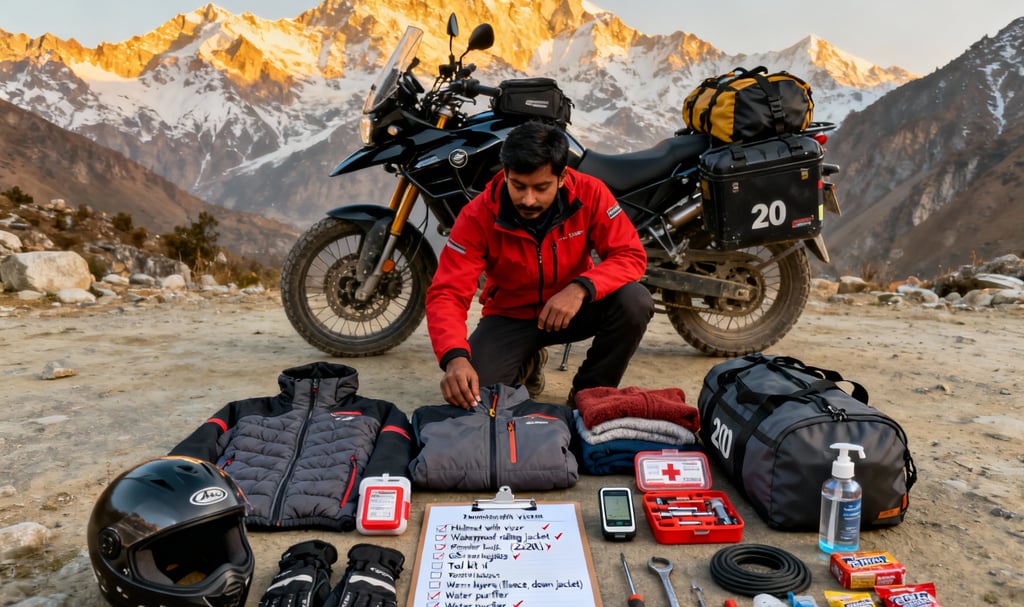
Whether you're joining our guided tours or planning a solo adventure, this list ensures you're prepared without being overloaded.
The Golden Rule: Weight Matters
Every kilogram affects your bike's handling, especially on high-altitude passes with loose gravel. Our maximum recommended luggage weight is 15kg excluding the rider. This might seem restrictive, but proper selection makes it achievable. Remember, you're riding, not camping permanently.
Essential Riding Gear
Your helmet is non-negotiable. We recommend full-face helmets with anti-fog visors rated for altitude use. ISI-certified Indian brands like Steelbird or Studds offer excellent value at ₹3,000-8,000. International brands like Royal Enfield or LS2 cost ₹8,000-15,000 but offer better ventilation for long days. Always carry your helmet bag—gravel roads mean dust accumulation.
Riding jacket and pants must have CE-certified armor at shoulders, elbows, back, knees, and hips. Mesh jackets work for plains but are useless above 3,000m where temperatures drop suddenly. We recommend textile jackets with removable thermal liners. Royal Enfield's Streetwind and Trailbound jackets (₹12,000-18,000) suit Indian conditions perfectly. Budget option: Rynox Storm Evo at ₹8,000.
Gloves need to balance protection, grip, and warmth. Summer gloves for plains riding, waterproof winter gloves for mountains. Rynox Urban or Axor Rider gloves cost ₹1,500-3,000 and last entire seasons. Buy one size larger than normal—your hands swell slightly at altitude.
Riding boots must cover ankles completely. Ankle injuries are the most common motorcycle injuries on mountain roads. Waterproof hiking boots work if you can't afford motorcycle-specific boots. Royal Enfield Long Haul boots (₹8,000) or Alpinestars boots (₹12,000+) provide proper protection.
Clothing for 7 Days
Two sets of riding clothes suffice—wear one, pack one. Quick-dry synthetic fabrics are essential. Cotton takes too long to dry in mountain humidity. We recommend: two moisture-wicking t-shirts, one thermal upper and lower, one lightweight down jacket, one rain jacket, two pairs of riding pants, three pairs of quick-dry underwear, three pairs of wool socks, one pair of casual pants for evening, one fleece or hoodie.
The layering system works: base layer (thermal), mid layer (fleece), outer layer (riding jacket). You adjust for temperature by adding or removing layers rather than packing different jackets for different days.
Camping Gear Essentials
Sleeping bag rated for the season and altitude. For summer Himalayan tours above 3,000m, you need bags rated to at least 5°C. We use Quechua Arpenaz 10°C bags with sleeping bag liners (combined ₹3,000-4,000). Winter tours need -5°C rated bags minimum.
Sleeping mat provides insulation from cold ground. Inflatable mats pack smaller than foam. Quechua Forclaz Trek 500 costs ₹2,500 and weighs 500g. Don't skip this—sleeping directly on ground even inside tent causes body heat loss.
Tent should accommodate you plus gear bags inside. Two-person tents work better than one-person even for solo riders because you need interior space. Quechua MH100 or Forclaz Trek 900 (₹5,000-8,000) handle Himalayan weather. Check waterproof rating—minimum 2000mm hydrostatic head.
Headlamp for campsite tasks. Spare batteries or USB rechargeable models. Basic model from Decathlon costs ₹500 and suffices.
Tools and Spares
Puncture repair kit including tire levers, patches, glue, and spare tubes. Practice changing tubes before the tour—fumbling in cold weather with numb fingers teaches expensive lessons. Compact tool kit with Allen keys, screwdrivers, pliers, and adjustable wrench. Most basic repairs involve loose bolts from vibration. Chain lubricant spray—mountain dust accelerates chain wear. Lubricate every 300km. Spare clutch and accelerator cables—these snap on older bikes. Instant puncture sealant like Flatz costs ₹250 and saves roadside tube changes. Duct tape and cable ties—the universal repair solution. We've jury-rigged fairings, seats, and luggage with these.
Safety and Medical
First aid kit customized for motorcycle touring should include: bandages and antiseptic for road rash, painkillers like paracetamol and ibuprofen, anti-diarrhea medication like loperamide, altitude sickness medication like acetazolamide (prescription required), antiseptic cream, Band-Aids various sizes, antibiotic cream, personal prescription medicines with extras.
Diamox (acetazolamide) prevents acute mountain sickness above 3,000m. Start taking 24 hours before reaching altitude. Consult your doctor for proper dosage. Side effects include tingling fingers and increased urination.
GPS device or smartphone with offline maps. Google Maps offline mode works but dedicated GPS devices like Garmin handle rough conditions better. PowerBank minimum 20,000mAh capacity. Mountain areas have no charging facilities. We recommend 30,000mAh to charge phone and action cameras.
Documents and Money
Original driving license and RC book in waterproof pouch. Photocopies stored separately. Bike insurance papers with valid dates. Police checks are common on mountain highways. Inner Line Permits for restricted areas like Nubra Valley or Tawang. Apply online 2-3 weeks before travel. Medical insurance details including emergency contact numbers. Cash in small denominations. Many villages don't have card facilities or ATMs. Budget ₹1,000 per day for food and accommodation.
Luxury Items Worth the Weight
Action camera like GoPro or Insta360 for recording memories. Our tours provide some of India's most spectacular riding footage. Portable speaker for campfire music. Anker Soundcore or Mi Portable speakers (₹2,000-3,000) survive rough handling. Book or Kindle for evening relaxation. Mountain sunsets at 5 PM mean long evenings. Playing cards for group bonding during rest days or weather delays.
What Not to Pack
Excessive clothing beyond the list above adds unnecessary weight. You'll wear the same riding gear daily regardless. Laptops unless you're working remotely—use phone for essential tasks. Hair dryers and styling tools—embrace the adventure look. Excess toiletries—small travel sizes suffice. Cotton towels—use lightweight microfiber towels that dry in an hour.
Packing Strategy
Distribute weight evenly across panniers or saddlebags. Heavy items low and close to bike center. Use compression bags for clothing to maximize space. Waterproof everything even if bags claim water resistance. Mountain weather changes instantly. Keep frequently needed items like rain gear and tools accessible without unpacking everything.
Rental vs. Own Gear
If you're joining our guided tours, we provide tents, sleeping bags, and cooking equipment. You only pack personal clothing and riding gear. This reduces your packing burden significantly and ensures equipment suited for conditions.
Final Thoughts
The best packing list evolves from experience. Your first tour teaches what you truly need versus what seemed important at home. Our list reflects collective wisdom from thousands of rider-days in the Himalayas. Trust the process, pack light, and focus on the ride ahead.
Ready to test this list on a real Himalayan adventure? Browse our upcoming tours and let us handle the logistics while you focus on riding.
Contact
Reach out for your next bold adventure
Phone
info@zoyahsikaa.com
+91 980 033 6667
© 2025. All rights reserved.