Welcoming GLOBAL Riders | Expert Guidance for Every Adventure | WhatsApp: +91 980 033 6667 | Email: info@zoyahsikaa.com

Riding Through Rural India: Cultural Etiquette and Safety Tips for Motorcycle Tourists
This guide shares practical wisdom from our years of leading tours through India's villages, helping you travel respectfully while staying safe.
11/16/20255 min read
Understanding Rural India's Hospitality
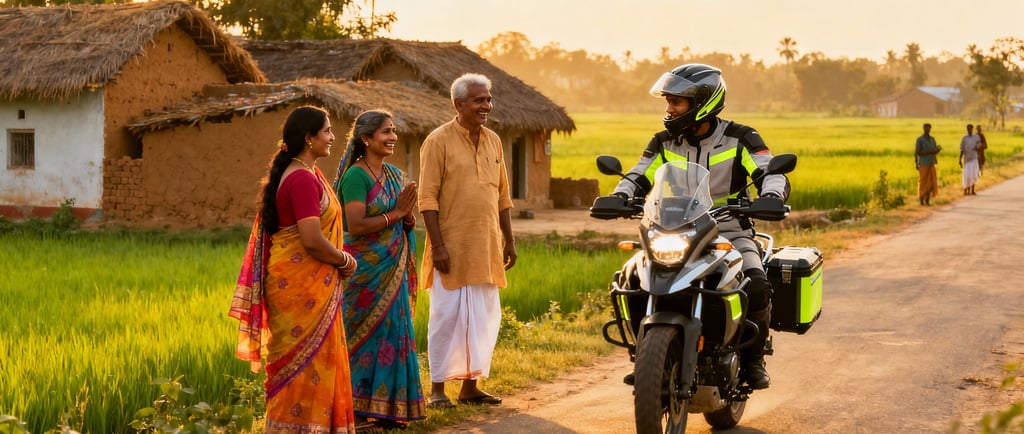
Indian villages operate on principles of hospitality that can surprise foreign visitors and urban Indians alike. Tea offerings from strangers aren't unusual—refusing can offend. Accept gratefully and offer payment subtly. Most won't accept, but the gesture matters. Village elders often approach riders with genuine curiosity about your journey. They're not being intrusive—showing interest in visitors is cultural norm. Share your story briefly and respectfully.
Children might follow your motorcycle in groups. They've likely never seen riders from outside their district. Wave, smile, but avoid distributing money or candy. This creates problematic expectations for future travelers. If you want to help, buy from local shops or eat at dhabas instead.
Appropriate Dress Code
Rural areas maintain conservative standards regardless of region. For women riders: cover shoulders and knees even when hot, carry a dupatta or scarf for visiting temples or traditional homes, avoid tight-fitting clothes that attract unwanted attention. For men: avoid shirtless riding despite heat, wear full pants not shorts when entering villages, remove sunglasses during conversations to show respect.
Religious sites have specific requirements. Remove shoes before entering temples, gurdwaras, and mosques. Many don't allow leather items inside. Cover your head in gurdwaras and some temples. Head coverings are provided if you forget. Photography might be restricted—always ask permission first.
Fuel Stop Etiquette
Small-town petrol pumps operate differently than city stations. Pumps might close during lunch hours (1-3 PM) without warning. Plan fuel stops accordingly. Payment might be cash-only. Carry small denominations—breaking ₹500 notes can be challenging. Queue systems are informal. Observe and respect local patterns rather than imposing urban expectations.
While waiting, park away from pump area. Space is limited and local traffic takes precedence. Don't rev engines or play loud music. Rural areas value peace, and noisy bikes create negative impressions affecting future riders' reception.
Navigating Village Roads
Livestock has right of way always. Cows, buffaloes, goats, and chickens aren't trained to avoid traffic. Slow down and pass wide. Horn usage differs from cities. Brief, polite honks warn of your presence. Continuous honking annoys villagers and startles animals. Market days (often weekly) create congestion. Riding through crowds requires patience. Speeding through markets is dangerous and disrespectful.
Children might play on roads in small villages. Reduce speed to 20-30 km/h until you're clear of habitation. School timing (2-4 PM) sees increased foot traffic. Plan routes around these hours if possible.
Accommodation Considerations
Budget guesthouses and homestays offer authentic experiences but lack amenities. Bucket baths are common. Hot water might require advance request. Inform hosts if you're vegetarian or have dietary restrictions. Assuming food preferences causes kitchen stress. Negotiate accommodation price before accepting rooms. Miscommunication about costs creates awkward situations at checkout.
Homestay hosts might invite you to family dinners. Accept if comfortable—it's genuine hospitality, not a tourist trap. Offer to buy groceries or contribute modestly if staying multiple nights. Respect house rules about alcohol, smoking, or shoes inside homes.
Photography Ethics
Never photograph people without explicit permission, especially women and children. Religious ceremonies require extra sensitivity—ask organizers first. Military installations, bridges, and border areas prohibit photography. Locals might warn you—heed advice. Offer to share photos with subjects. WhatsApp numbers exchange works well. Many rural Indians have smartphones and appreciate receiving photos.
Drones face severe restrictions. Many rural areas fall under defense zones where drone usage is illegal. Fines and equipment confiscation are real risks. Check local regulations before flying.
Safety Considerations for Solo Riders
Inform someone about your daily route and expected arrival time. Family, friends, or hotel staff should know your itinerary. Stop riding before sunset. Rural roads lack lighting, potholes multiply, and visibility of livestock drops to nearly zero. Roadside assistance doesn't exist in remote areas. Self-reliance is essential—hence our comprehensive tool kit recommendations.
Avoid riding during village festivals or marriage processions. Roads close informally, and intoxicated individuals might behave unpredictably. Women riders face additional challenges in some regions. Our women-only tours address these, but solo women should consider riding in pairs through conservative areas.
Alcohol and Riding
This should be obvious but bears repeating: never ride after consuming alcohol. Rural police checkpoints are common, and penalties include license suspension. Villagers notice alcohol consumption by visitors. Reputation affects future travelers' reception. Some states like Gujarat prohibit alcohol entirely. Respect local laws even if you disagree.
Mobile Connectivity Realities
Network coverage is patchy at best in mountains and remote plains. Download offline maps before leaving connectivity zones. Carry physical maps as backup—asking directions builds local interactions anyway. PowerBanks are essential. Charge whenever electricity is available.
Emergency numbers work even without network if you're in tower range. 112 is India's unified emergency number, but response times in rural areas are slow. Self-sufficiency remains your best safety net.
Medical Preparedness
Primary health centers exist in larger villages but lack advanced equipment. Serious injuries require evacuation to district hospitals hours away. Comprehensive medical insurance with evacuation coverage is non-negotiable. Carry personal medication plus extras. Replacement isn't possible in remote areas.
Common ailments during tours include dehydration (drink water continuously), altitude sickness above 3,000m (recognize symptoms early), stomach issues (avoid raw vegetables and street food initially), and road rash from minor falls (clean thoroughly to prevent infection).
Respecting Local Customs
Public displays of affection are unwelcome even between married couples. Hand-holding is maximum acceptable intimacy. Left hand use for eating or giving items is considered unclean. Use right hand predominantly. Pointing at people or religious symbols with feet is deeply offensive. Be mindful of leg positions when sitting.
Religious sentiments run deep. Avoid commenting on religion, politics, or caste issues regardless of your opinions. These topics spark passionate debates inappropriate for casual travelers.
Environmental Responsibility
Carry all waste out of camping areas. Rural India lacks waste management infrastructure. Littering creates lasting negative impressions. Use toilets where available. If unavoidable, follow proper wilderness hygiene burying waste far from water sources. Buy local produce and support village economies directly. This creates positive associations with motorcycle tourists.
When Things Go Wrong
Accidents happen. Local help usually appears quickly—village medicine men provide basic first aid. Accept help gratefully but assess injury severity honestly. Minor falls can be handled locally, but serious injuries need hospital evacuation immediately.
Mechanical breakdowns in remote areas test patience. Local mechanics might lack Royal Enfield experience but improvise creative solutions. Accept their expertise—they keep older bikes running with minimal tools. Police involvement in accidents is mandatory. Be honest, polite, and patient. Resolution takes time.
The Reward of Respectful Travel
Following these guidelines transforms your motorcycle tour from surface-level tourism into meaningful cultural exchange. Villages we've visited repeatedly now welcome our groups as friends, not just customers. Children remember riders who treated them respectfully. Chai shop owners save seats for groups they recognize.
This is the real India—not the Instagram-filtered version, but the authentic, complicated, beautiful reality of rural life. Approach it with humility, respect, and openness. The memories and friendships you'll create far exceed any scenic photograph.
Join our tours to experience this India with guides who've built relationships across thousands of village kilometers. We don't just show you roads—we introduce you to the people who make India unforgettable.
Contact
Reach out for your next bold adventure
Phone
info@zoyahsikaa.com
+91 980 033 6667
© 2025. All rights reserved.